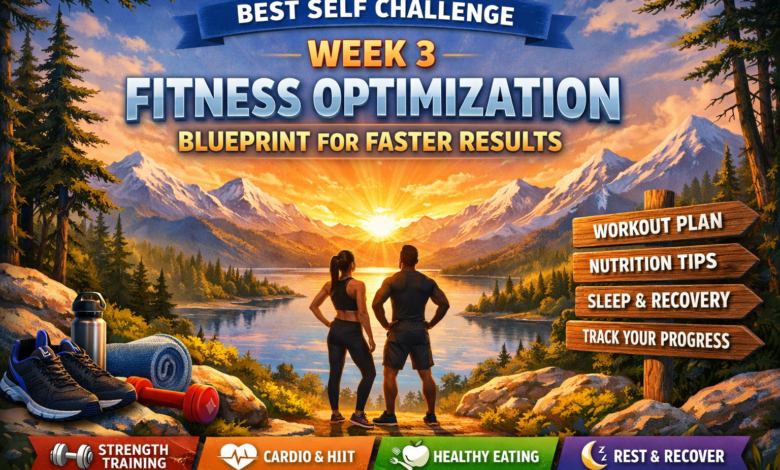
Best Self Challenge Week 3 Fitness Optimization Blueprint for Faster Results
Best Self Challenge Week 3 helps you optimize fitness with smarter training, recovery, nutrition, and tracking to boost strength, stamina, and results.


The first two weeks of any challenge usually feel exciting because everything is new. Motivation is high, routines are fresh, and even small wins feel big. Week 3 is different. Week 3 is where the body starts adapting, the mind starts negotiating, and the results begin to depend on strategy rather than enthusiasm. That is exactly why Best Self Challenge Week 3 is designed to help you optimize your fitness instead of simply doing more.
When you optimize your fitness, you stop relying on random effort and start using a system. You learn how to match your workouts to your goals, how to recover so you can train consistently, and how to fuel your body so your energy does not crash. Fitness optimization is not about perfection, and it is not about extreme workouts that leave you exhausted. It is about doing the right work at the right intensity and letting your body adapt in the right way.
A lot of people reach Week 3 and unknowingly make two mistakes. They either push harder every day and burn out, or they repeat the same workouts and hit a plateau. Both problems come from the same root issue: a lack of structure. This week solves that by creating a simple, repeatable approach to training, recovery, nutrition, and progress tracking. If you follow what you learn here, you will not only feel stronger and fitter this week, you will also build habits that stay with you long after the challenge ends.
Your mission in Week 3 is clear. You will optimize your fitness so your time, energy, and effort produce real, visible progress.
What “Optimize” Means in Best Self Challenge Week 3 Fitness
In Week 3, optimization means aligning your actions with outcomes. You are not just exercising to feel tired; you are training to improve. For most people, the best results come from combining strength training for muscle tone and metabolism, smart cardio for heart health and fat loss support, recovery routines to prevent overtraining, and nutrition that improves performance and consistency.
This is why the theme of this week is optimize your fitness. The goal is to move with purpose. You want every session to have a reason, every recovery day to create improvement, and every nutrition decision to support energy and results. When this happens, your body composition improves, your endurance rises, and your motivation becomes easier to maintain because progress becomes obvious.
Week 3 Fitness Optimization Framework: Training, Recovery, Fuel, and Tracking
To optimize your fitness, you need a framework that is simple enough to follow and strong enough to work. Week 3 uses four pillars that support each other: training, recovery, fuel, and tracking. Training creates stimulus, recovery creates adaptation, fuel creates performance, and tracking creates clarity. When one pillar is weak, the others suffer. When all four work together, results accelerate.
Pillar One: Training Smarter to Optimize Your Fitness
The training goal in Week 3 is not to do the most workouts. The goal is to do the most effective workouts. Effective training is built on balance. You need strength work to shape and strengthen the body, conditioning to improve stamina, and enough variety to prevent overuse while still keeping your routine consistent enough to progress.
Strength Training as the Core of Week 3
Strength training is the foundation of fitness optimization because it builds muscle, improves posture, supports joints, and helps your body burn more calories over time. It also gives you measurable progress points, which makes consistency easier. When you want to optimize your fitness, strength training becomes the anchor that keeps everything structured.
In Week 3, your focus should be quality volume. This means you do enough work to challenge the muscles, but not so much that you cannot recover. Instead of chasing maximum weight or maximum soreness, you focus on clean form, controlled repetitions, and steady improvement. That improvement can come from doing more reps with the same weight, lifting slightly heavier with good technique, or performing the movement with better range of motion and control.
Progressive Overload: The Engine Behind Real Results
If you repeat the same workout with the same intensity forever, your results will slow down. That is why progressive overload is essential to optimize your fitness. Progressive overload simply means that, over time, you give your body a slightly greater reason to adapt. The change does not need to be dramatic. Even a small improvement each week compounds into major progress across months.
In Week 3, progressive overload can be applied by adding a few repetitions, increasing weight modestly, improving tempo with slower lowering phases, or shortening rest periods slightly while maintaining form. The key is to pick one or two areas to improve each week so the process stays sustainable.
Cardio That Supports Your Goal Without Draining Your Energy
Cardio is useful, but only when it matches your recovery and your goal. Many people sabotage Week 3 by doing too much intense cardio, which increases fatigue, raises stress, and makes strength training feel harder. Fitness optimization uses cardio strategically so you get the benefits without losing momentum.
The best approach for Week 3 combines steady, moderate-intensity cardio with a smaller dose of short intervals. Moderate cardio improves cardiovascular health, supports fat loss, and helps recovery by increasing blood flow. Short intervals improve conditioning and stamina without taking over your week. When your cardio is balanced like this, it becomes easier to optimize your fitness without burning out.
Pillar Two: Recovery Strategies That Optimize Your Fitness Faster
Recovery is not what you do when you “skip” training. Recovery is what makes training work. If you want to optimize your fitness, you must treat recovery as part of the plan rather than an afterthought.
Sleep as the Highest-Impact Recovery Tool
Your body repairs muscle, balances hormones, and restores energy during sleep. When sleep is poor, workouts feel harder, cravings increase, and motivation drops. That is why sleep consistency is one of the fastest ways to optimize your fitness in Week 3.
The most effective approach is to create a predictable sleep schedule. Going to bed and waking up at roughly the same time supports recovery and makes energy more stable. If you struggle with sleep, a calmer pre-bed routine, reduced screen exposure before bedtime, and a cooler, darker sleep environment can make a noticeable difference within a few nights.
Mobility and Flexibility to Keep Training Smooth
Week 3 is often when stiffness starts to show up, especially in hips, shoulders, and lower back. Mobility work keeps joints moving well and reduces injury risk. It also improves exercise quality because better mobility allows better form. When you optimize your fitness, you are not just building strength; you are building a body that moves well.
A short daily mobility routine can be more effective than doing long stretching sessions once a week. The goal is not to become extremely flexible. The goal is to stay pain-free, move smoothly, and train consistently.
Active Recovery That Builds Momentum Without Stress
Active recovery means movement that helps the body recover instead of adding extra strain. Gentle walking, light cycling, easy yoga, or relaxed mobility sessions can reduce soreness and improve circulation. This is especially useful in Week 3 because it keeps you consistent while lowering overall stress. Active recovery is one of the most underestimated ways to optimize your fitness because it improves how you feel day to day, which improves how often you train.
Pillar Three: Nutrition That Helps You Optimize Your Fitness
Week 3 nutrition is not about dieting harder. It is about fueling better. When nutrition supports your workouts, you gain more strength, recover faster, and feel more energetic. That is fitness optimization in action.
Protein Intake for Strength, Recovery, and Body Composition
Protein supports muscle repair and helps you maintain lean mass while reducing body fat. It also helps control appetite because it is more filling than many other foods. If you want to optimize your fitness, consistent protein intake is one of the simplest and most effective upgrades.
A practical approach is to include a solid protein source at every meal. This can include eggs, chicken, fish, lean meat, Greek yogurt, legumes, tofu, or protein shakes depending on your preferences and lifestyle. The objective is consistency, not perfection.
Smart Carbs and Fats for Performance and Energy
Carbohydrates are not the enemy in Week 3. Carbs support performance, especially if you train with intensity. When carbs are too low, workouts can feel heavier, recovery can slow down, and energy can dip. Fitness optimization means choosing carbs that support your goals, such as oats, rice, potatoes, fruit, and whole grains, and pairing them with protein and vegetables.
Healthy fats also matter for hormones and overall health. Rather than cutting fats completely, focus on quality sources like olive oil, nuts, seeds, and avocado, while keeping portions mindful.
Hydration and Electrolytes: The Hidden Performance Factor
Dehydration can feel like fatigue, poor focus, and lower workout output. Many people think they need more supplements when they actually need more water and electrolytes. If you want to optimize your fitness, hydration becomes a daily habit that supports everything else you do.
Pillar Four: Tracking Progress to Optimize Your Fitness with Confidence
Tracking is not about obsessing. Tracking is about clarity. When you track the right things, you can see progress even when motivation dips. That makes it easier to stay consistent, and consistency is what helps you optimize your fitness over time.
Training Performance Tracking
The most meaningful tracking is performance-based. When you can lift a bit more, do a few more reps, or maintain better form, you are progressing. Those improvements show that your body is adapting.
Body and Energy Tracking
Fitness progress is not only about the scale. Measuring waist size periodically, noticing how clothing fits, and taking progress photos in similar lighting can reveal changes that the scale hides. Tracking energy levels and recovery also matters because improved energy often shows up before visible changes. When you optimize your fitness, you build results that are both visible and functional.
Common Week 3 Mistakes That Prevent Fitness Optimization
One common mistake is doing too much intensity too soon. When every workout feels like a test, recovery suffers and results slow down. Another common mistake is ignoring progressive overload and repeating the same routine without progression. A third mistake is under-fueling, which leads to fatigue and inconsistency. Week 3 becomes easier when you approach it as optimization rather than punishment.
How to Stay Motivated in Week 3 Without Burning Out
Motivation fades when goals are vague. Fitness optimization creates motivation because it creates feedback. When you see that your strength is improving, your stamina is rising, and your recovery is better, you feel encouraged to continue.
The best Week 3 mindset is to treat this as skill-building. You are learning how to train, recover, and eat in a way that supports your life. That is why Best Self Challenge Week 3 is powerful. It is not just a temporary push. It is a system that helps you optimize your fitness long term.
Conclusion
Week 3 is your turning point. You now have enough consistency to build momentum, and enough experience to adjust what is not working. When you optimize your fitness, you stop guessing and start improving with purpose. Strength training builds your foundation, smart cardio improves conditioning, recovery amplifies results, nutrition powers performance, and tracking keeps you focused.
If you commit to the Week 3 optimization approach, you will notice better workouts, faster recovery, and clearer progress. Most importantly, you will build a routine that feels sustainable. That is the real win of this challenge: becoming the person who trains consistently, recovers wisely, and continues to optimize your fitness long after Week 3 ends.
FAQs
Q: What is the main goal of Best Self Challenge Week 3?
The main goal of Best Self Challenge Week 3 is to help you optimize your fitness by improving your training structure, recovery habits, nutrition, and progress tracking.
Q: How can I optimize your fitness if I only have 30 minutes a day?
You can optimize your fitness in 30 minutes by focusing on efficient strength workouts, short conditioning sessions, and consistent recovery habits like sleep and mobility.
Q: Is cardio necessary to optimize your fitness in Week 3?
Cardio is helpful for heart health and stamina, but to optimize your fitness, it should be balanced so it supports strength training and recovery rather than draining energy.
Q: What should I eat to optimize your fitness without strict dieting?
To optimize your fitness, prioritize protein at each meal, include vegetables for nutrients, choose quality carbs for energy, and stay hydrated for performance and recovery.
Q: Why do I feel sore or tired in Week 3 even when I’m consistent?
Soreness and fatigue can happen as your body adapts. To optimize your fitness, improve sleep, manage workout intensity, add mobility, and ensure you are eating enough protein and fluids.
Also Read: 7 Unique Mens Outfit Ideas for 2025 That Look Amazing